Your Guide to Cartier Tank Watches: Buying and Care Explained
Listings for a Cartier Tank for sale offer access to one of the world's most recognisable timepieces. For over a century, the Tank has been a symbol of sophisticated design, worn by everyone from Princess Diana and Muhammad Ali to Andy Warhol, who said, "I wear a Tank because it's the watch to wear".
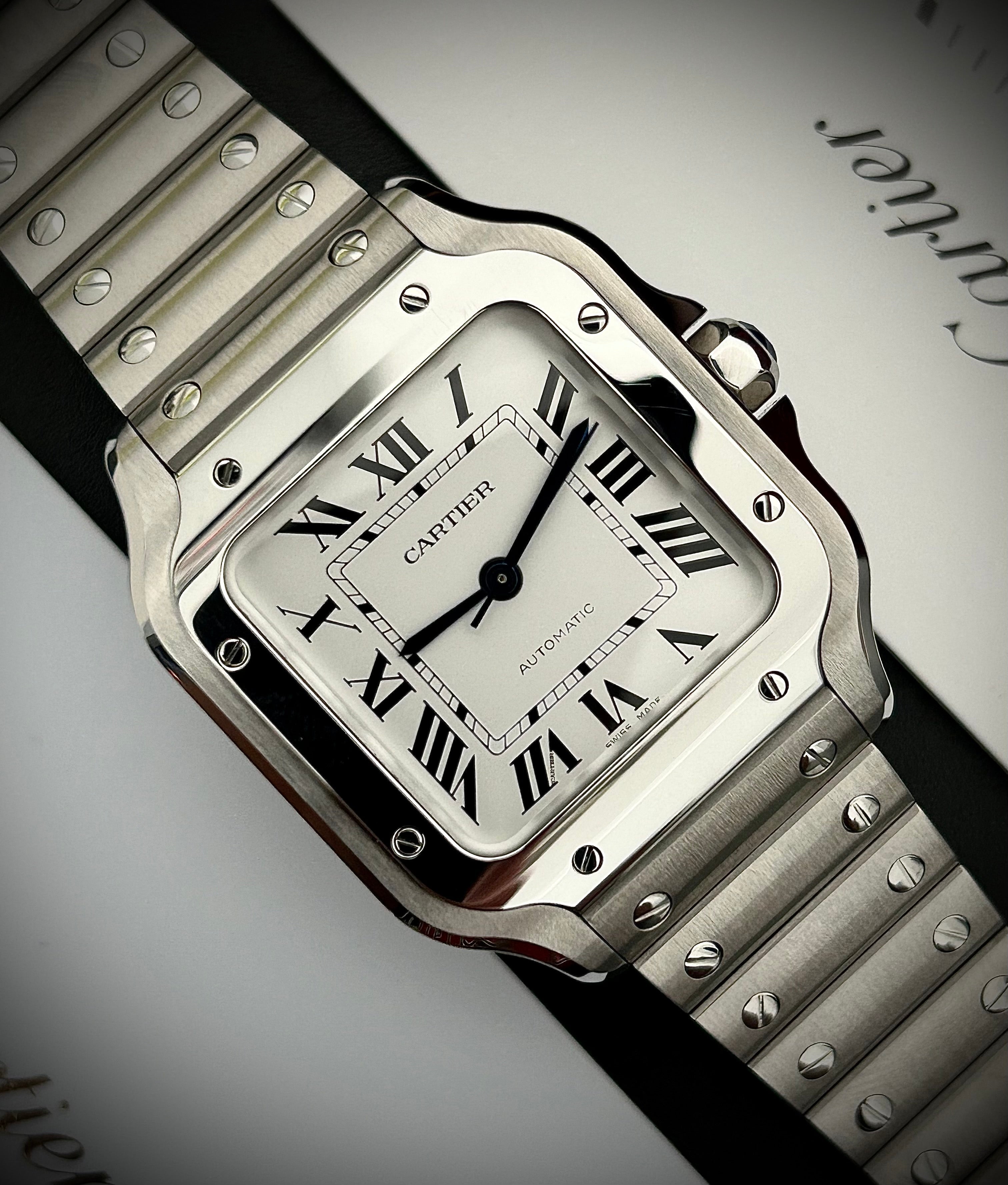
Its appeal isn't about technical complexity; it's about understated, timeless presence. The clean lines, rectangular case, and Roman numerals are instantly recognisable. Today, the collection includes a wide range of models, from the accessible Tank Must to the classic Tank Louis Cartier, offering a version for every wrist and budget.
For Australian buyers, navigating the market requires knowledge. Understanding the differences between models, materials, and movements is key to making a smart purchase. This guide breaks down everything you need to know, from the Tank's history to the practicalities of buying safely and verifying authenticity.
A Guide to Finding a Cartier Tank for Sale
The History and Timeless Design of the Tank
The Cartier Tank’s story began in 1917, when Louis Cartier was inspired by the top-down view of a Renault FT-17 tank from World War I. The parallel tracks flanking the central cockpit became the watch’s signature brancards, the vertical bars that integrate the strap into the case.
First introduced in 1919, the Tank’s rectangular form, Roman numerals, and sapphire cabochon crown set it apart from the round watches typical of the era, embodying the clean lines and elegance of early Art Deco. More than a timepiece, its design has remained iconic for over a century, admired for its style as much as its function.
Exploring the Cartier Tank Collections
Cartier has expanded the Tank into a family of collections, each with a unique take on the original. You can see the current range on the official collection page.
- Tank Must: The modern entry point, often in steel with quartz or SolarBeat™ movements. It offers the classic look with contemporary reliability.
- Tank Française: Known for its integrated metal bracelet and curved case, giving it a sportier, more modern feel since its 1996 launch.
- Tank Louis Cartier: The purest expression of the original, featuring softer lines and typically crafted from precious metals with manual-winding movements.
- Tank Américaine: A bolder, elongated, and curved case that hugs the wrist, making a stronger statement.
- Tank Cintrée: A rare and highly sought-after model with a dramatically long, curved case designed to follow the wrist's contour.
Other notable variations include the reversible Tank Basculante and the distinctive, rhomboid-shaped Tank Asymétrique.
Materials, Movements, and Sizes
When looking for a Cartier Tank for sale, the options help tailor the watch to your style.
- Materials: Stainless steel offers durability for models like the Must and Française. Yellow gold provides a classic, warm look, while rose gold is a popular modern alternative. White gold and platinum offer understated luxury.
- Movements: Quartz movements are convenient and precise. The innovative SolarBeat™ movement runs on light. Automatic movements wind with the motion of your wrist, whilst manual-winding movements require a daily winding ritual that connects you to the watch.
- Sizes: Sizes generally range from Small (under 31mm) for a classic, discreet look, to Medium (31-34mm) for versatility, and Large (34mm+) for a more prominent presence on the wrist.
What to Expect: Pricing for a Cartier Tank
The price of a Cartier Tank depends on its model, material, and condition. A steel Tank Must is the most accessible entry point, whilst a Tank Louis Cartier in gold or a rare vintage model like the Cintrée will command a higher price. Factors such as service history, originality of parts, completeness (box and papers), and market demand all influence value. Australian pricing can also reflect exchange rates and local availability. Whilst some rare pieces have strong long-term potential, markets do move in cycles; it’s wise to buy primarily because you enjoy the watch.
At WristWorks, we focus on transparent pricing, explaining what drives value so you can make a confident decision.
How to Buy a Cartier Tank in Australia: Private vs WristWorks
There are two common paths when you see a Cartier Tank for sale: buy privately (DIY) or work with a specialist like WristWorks.
-
Buying privately (DIY)
- Pros: Potentially lower upfront price; wide sources (private sellers, forums, classifieds).
- Cons: Higher risk of undisclosed issues or inauthentic parts; more legwork to verify the watch and the seller; limited recourse if something goes wrong.
-
Buying from WristWorks
- Pros: In-house authentication on every watch and authenticity guaranteed; expert guidance on model differences, sizing, and value; secure, streamlined purchase and nationwide service.
- Cons: You may pay a fair premium over raw private listings, reflecting professional authentication and preparation.
Practical tips if you choose to buy privately:
- Verify the seller’s identity and track record; ask for clear, high-resolution photos (dial, caseback, movement if accessible, serials, clasp).
- Seek evidence of service history and check for consistency between the case, dial, and hands on vintage pieces.
- Arrange independent verification before you commit. WristWorks can recommend trusted third-party authentication or servicing options.
- Be wary of rushed sales and prices that seem far below market norms.
Our online-first model is built for Australian buyers who want clarity: every watch is authenticated in-house by experts and its condition properly described. We guarantee authenticity and are happy to talk through trade-offs across models so you choose the right Tank for your wrist and budget.
How to Care for Your Tank
Proper care will keep your Tank in excellent condition for decades.
- Winding: If your watch has a manual movement, wind it daily by turning the crown clockwise until you feel gentle resistance.
- Water Resistance: Most Tanks are rated to 30 metres, meaning they can handle splashes but should not be worn while swimming or showering.
- Cleaning: Use a soft, dry cloth to wipe down the case and crystal.
- Polishing: Polishing can reduce scratches but removes metal. It’s acceptable for most modern watches but generally avoided on vintage pieces to preserve their sharp lines and value. If needed, professional polishing should be done sparingly.
- Servicing: A mechanical watch should be serviced every 3-5 years to ensure its movement remains lubricated and accurate.

Owning a Piece of Design History
The Cartier Tank is more than a watch; it’s a living design classic. Whether you choose a modern Tank Must or a vintage Louis Cartier, you’re acquiring a piece with enduring relevance—and, with the right guidance, one that can fit your style and budget with confidence.
For collectors in Australia, the pre-owned market can feel opaque. That’s why WristWorks is built on transparency and expertise. Our online-first model makes buying and selling simple and secure nationwide. Every watch we sell is authenticated in-house by our experts, and we guarantee its authenticity. Whilst we don’t issue physical certificates for this internal process, we can recommend trusted third-party authentication or servicing options when appropriate.
Thinking of selling your Tank? We prioritise outright purchases for speed and certainty—95% of our inventory is owned by WristWorks. We also offer consignment as a useful secondary option for clients who prefer it; there are no special limitations on consignment pieces. All consigned watches are held and authenticated by us, and payments are made directly to WristWorks.
Explore our current collection of watches to find your next timepiece, or if you’re looking to sell or trade towards something new, get a transparent valuation for your watch today.
Frequently Asked Questions
Q: What payment options do you offer?
A: We offer secure, straightforward payment methods suited to high-value transactions, including bank transfer. If you have a preferred method, please contact us to discuss current options. We do not accept credit card payments.
Q: Do you offer consignment or trade-ins?
A: Yes. Our primary service is buying outright (95% of our inventory is owned by WristWorks) because it’s fastest and most convenient. Consignment is an optional, secondary service for clients who prefer it. All consigned pieces are held and authenticated by us, and payments are made directly to WristWorks when the watch sells. Trade-ins can be arranged—typically by valuing your watch for an outright purchase and applying that amount toward your next piece.
Q: How does WristWorks ensure authenticity?
A: Every watch undergoes rigorous in-house authentication by our expert team, and we guarantee authenticity. We don’t issue physical certificates for this internal process, but if you’d like an independent opinion or future servicing, we can recommend trusted third-party specialists.
Ready to move forward? Browse our collection, request a valuation, or contact WristWorks to speak with a specialist about the right Cartier Tank for your needs.