How to Identify a Real Rolex Watch and Avoid Superclones
If you are looking at a Rolex before buying, start with careful external checks rather than relying on one detail or a set of papers. A modern watch can be professionally polished to restore its finish, while vintage pieces are generally best left with their original case lines and bevels intact.
Key Takeaways
- Start with the Cyclops lens, date display, dial printing and rehaut engraving, as poor alignment often gives a replica away.
- Check the case, bracelet and clasp for clean fit, solid construction and consistent finishing.
- A smooth seconds hand is useful context, but it is not proof on its own.
- Boxes, cards and serial details should match, but they can also be copied or paired with the wrong watch.
- For a more detailed buying process, follow this Rolex Verification Guide.
External Checks Before You Buy
Cyclops Magnification, Date Alignment, and Crystal Etchings
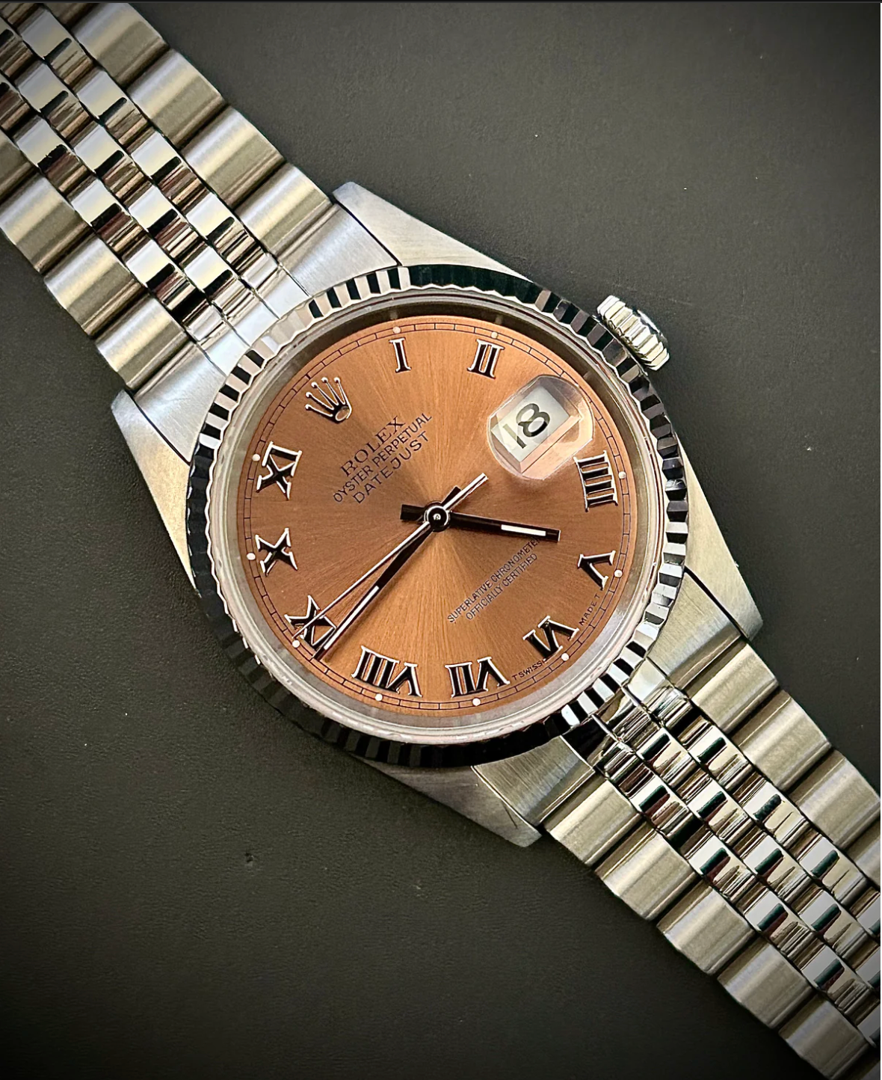
The Cyclops lens above the date window is a useful first check on models such as the Submariner Date, Datejust and GMT-Master II. On a genuine watch, the date should look large, centred and clear through the lens. Many replicas make the number appear small, distorted or set too far back. Modern examples may also have an anti-reflective coating beneath the Cyclops, which helps keep the date easy to read in bright Australian sunlight.
Modern Rolex sapphire crystals may also carry a tiny crown etching near 6 o'clock. It is subtle and usually needs angled light and a loupe to see clearly. If the marking looks thick, cloudy or obvious at a glance, treat it as a reason to inspect the watch more closely.
Case Weight, Rehaut Engravings, and Serial Number Verification
Weight can be a helpful clue, but it should never be your only test. Rolex uses Oystersteel for many stainless-steel models, giving the case and bracelet a substantial, well-finished feel. Some replicas use different steels or lighter internal construction, so compare the overall fit and finish with reliable model information rather than depending on a scale alone.
| Inspection Point | What to Look For | Common Concern |
|---|---|---|
| Case and Bracelet | Solid feel, even finishing and close-fitting parts | Light construction, gaps or uneven edges |
| Steel and Finish | Consistent Oystersteel finish on applicable models | Mixed finishes or poorly matched components |
| Rehaut Inner Bezel | Crisp “ROLEX” text aligned with the minute markers | Shallow engraving or uneven letter placement |
| Serial Details | Cleanly cut details that match the documentation | Rough stamping or repeated generic details |
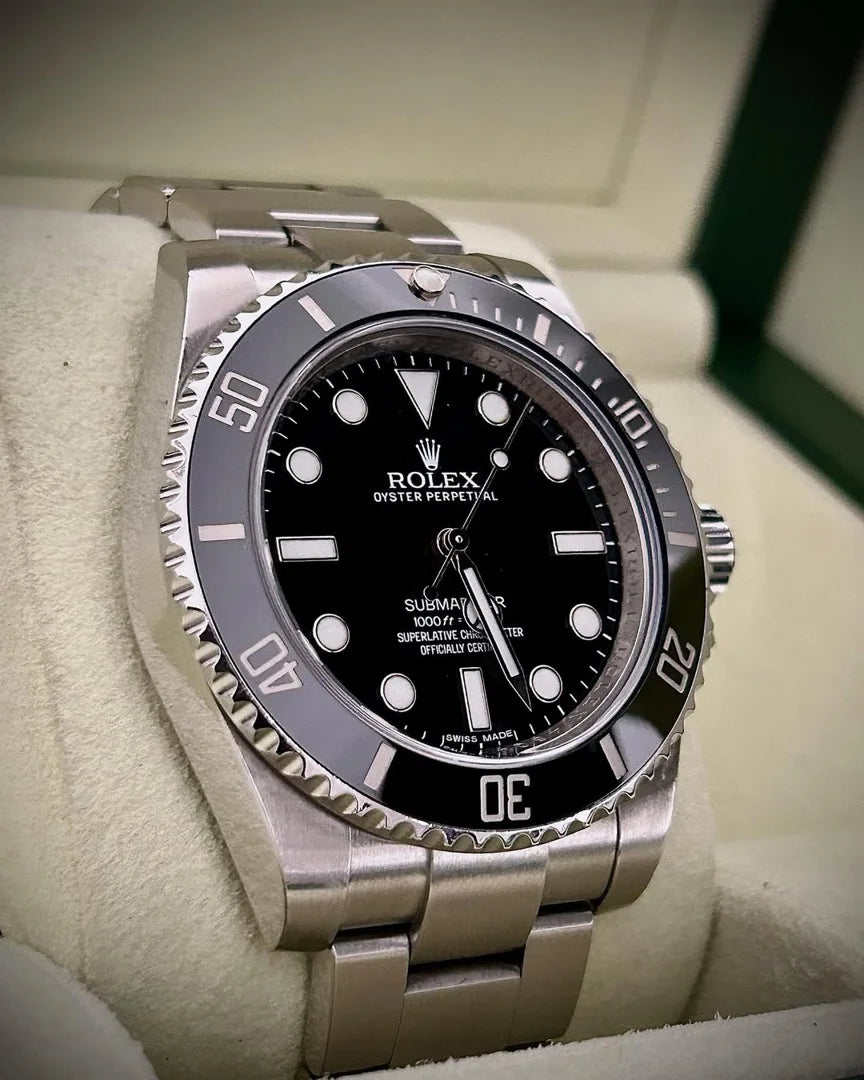
The rehaut, or inner bezel ring beneath the crystal, is another useful area to inspect. The repeated “ROLEX” engraving should look crisp and consistently aligned with the minute markers, with the crown centred at 12 o'clock. On modern watches, the serial detail at 6 o'clock should also appear clean and sharply cut.
Movement Sweep and Crown Operation
A mechanical Rolex seconds hand should move in a smooth series of small steps rather than making a single jump each second. That said, movement behaviour is only one part of the assessment. Better replicas can imitate a smooth sweep, so use it alongside checks of the dial, case, bracelet and documentation.
The screw-down winding crown should engage smoothly and feel precise as it is operated. On professional dive models, the Triplock system uses sealing components around the winding stem. Avoid forcing the crown, and let a qualified watchmaker inspect the movement if anything feels rough or inconsistent.
Bracelet Tolerances, Solid End Links, and Clasp Markings
Oyster, Jubilee and President bracelets should feel secure and carefully finished. On modern watches, the end links should sit neatly between the lugs without obvious gaps, sharp edges or excessive side-to-side movement.
Clasps should close firmly and feel positive rather than loose or flimsy. On sports models with Glidelock adjustment, the extension should move smoothly without catching. The hands and hour markers should also have tidy, evenly applied lume. A blue glow is common on modern Rolex models, but lume colour alone is not proof.
Internal Movement Inspection and Professional Verification
External checks can rule out many poor replicas, but higher-quality copies may need a professional movement inspection. Some copied movements are designed to resemble genuine Rolex layouts, so an experienced watchmaker should assess the internal parts before you rely on a purchase decision.
What a Watchmaker Checks Inside the Case
Opening a solid caseback should be left to a qualified watchmaker, as unnecessary handling can damage seals or components. Inside, the movement should show consistent finishing, tidy bridge work, clear engraving and components that match the correct model. A professional can compare the movement layout and parts against reliable technical information.
One important area is the regulating system. Genuine Rolex movements use a free-sprung balance and a blue Parachrom hairspring on relevant modern models. Copied movements may instead show standard regulator arms, steel curb pins or generic balance springs. For more detail on complex chronograph checks, see this Fake Rolex Daytona Identification Guide.
Provenance, Box and Papers, and Professional Watchmaker Verification
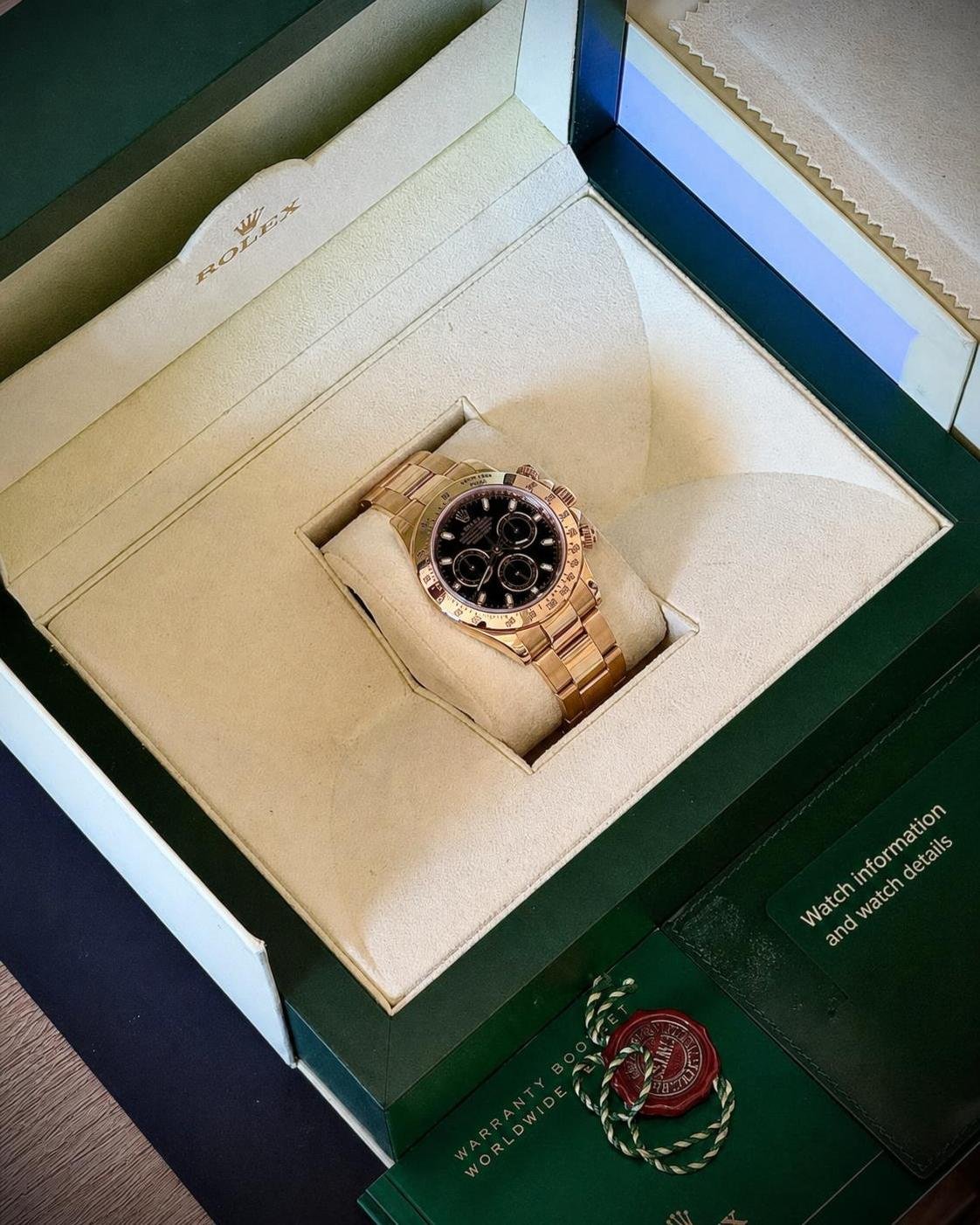
A green presentation box, manuals and a guarantee card can support a watch’s history, but they do not prove that the watch is genuine. These items can be copied or paired with the wrong watch. Compare the serial details with the rehaut engraving and available service paperwork, then have any uncertainty checked professionally.

When buying or selling in Australia, private online listings, classifieds and auction platforms can create added risks around payment, condition and the watch itself. Selling outright to an established specialist dealer is the recommended option when you want a straightforward, secure process. Consignment can suit selected sellers who are comfortable waiting for the right buyer, but it remains a secondary option.
WristWorks directly owns 95% of its inventory and holds every consigned watch in its care. Payments are handled directly, while each timepiece is put through bench evaluation, movement timing analysis and pressure testing before it is offered for sale. To see what is currently available, browse Pre-Owned Rolex Watches in Australia.
A Practical Rolex Buying Checklist
When you are assessing a Rolex, look at the full picture rather than relying on one positive sign. If several details do not add up, pause the transaction and arrange a professional inspection.
- Crystal and Date: Check that the Cyclops lens presents a clear, centred date.
- Crown Etching: Look for a subtle crown detail near 6 o'clock under angled light.
- Dial and Printing: Check for sharp printing, centred markers and even lume.
- Rehaut Engraving: Confirm that the inner bezel text is crisp and consistently aligned.
- Serial and Papers: Compare the serial detail with the available documentation.
- Case and Bracelet: Look for solid construction, close-fitting end links and tidy finishing.
- Movement and Crown: Treat a smooth sweep and precise crown action as supporting clues, not proof.
- Professional Review: Have a qualified specialist inspect the watch before completing the transaction.
If you would like help assessing a watch or exploring available options, browse the Luxury Watch Collection or send a Watch Enquiry to the WristWorks team in Perth, Western Australia.