How to Pick a Good Watch That Actually Fits Your Style
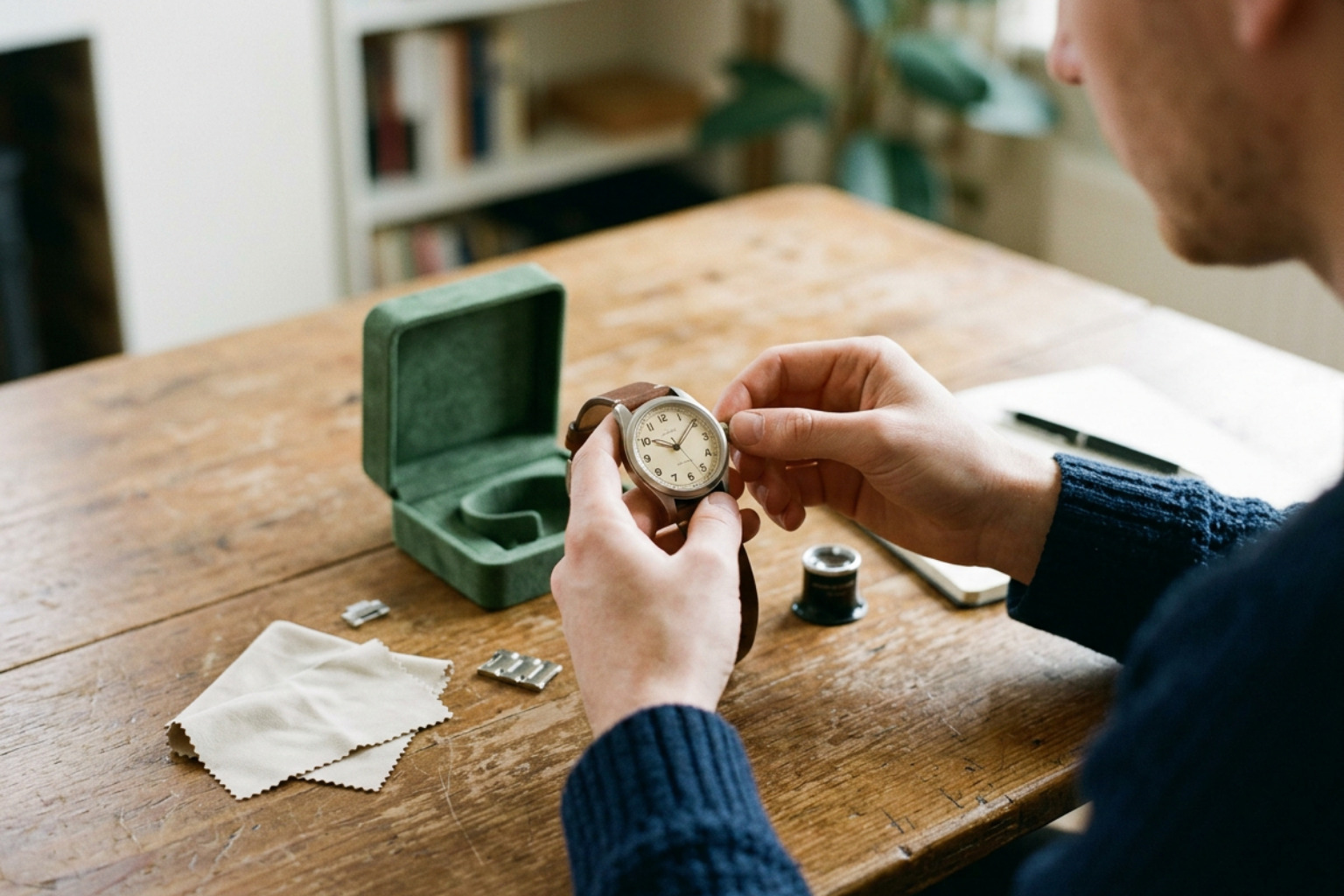
Choosing a watch should feel exciting, not confusing. If you are weighing up your first quality timepiece or narrowing down your next purchase, the best place to start is with how you will actually wear it.
Key Takeaways
- Start with your lifestyle: daily wear, work, weekends, travel, sport, or formal occasions.
- Choose the movement that suits you: quartz for low maintenance or automatic for traditional craftsmanship.
- Check fit properly by looking at case diameter, lug-to-lug length, thickness, and wrist comfort.
- Prioritise practical quality markers such as sapphire crystal, solid case finishing, and a strap or bracelet that suits Australian conditions.
- Buy from a trusted Australian dealer with clear photos, transparent condition details, and straightforward after-sale support.
How To Pick A Good Watch Without Overcomplicating It
Knowing how to pick a good watch comes down to a few practical decisions made before you fall for a dial, brand, or discount. A watch needs to suit your wrist, your wardrobe, your routine, and your budget.
The Australian watch market gives buyers plenty of choice, from accessible quartz models to pre-owned luxury watches and independent brands. That choice is useful, but it can also make the process feel harder than it needs to be.
A good watch is not simply the most expensive one, the most recognisable brand, or the one with the longest spec sheet. It is the watch that feels comfortable, performs reliably, and makes sense for the way you live.
I'm Brad Purdy, founder of WristWorks. My work in sales, finance, and the Australian pre-owned watch market has shown me that buyers make better decisions when the process is simple, honest, and practical.
Use this guide as a conversation before you buy. We will look at lifestyle, movement type, fit, materials, straps, online buying, and long-term value so you can choose with confidence.
Start With How You Will Wear The Watch
Before you compare brands, decide what job the watch needs to do. Are you after something for the office, weekends, travel, formal events, outdoor use, or a bit of everything?
If you want one watch that covers most situations, look for a clean dial, moderate case size, useful water resistance, and a strap or bracelet that can be dressed up or down. This is usually more useful than buying something highly specialised too early.
A dress watch should feel slim and simple enough to sit comfortably under a cuff. A sport or dive-style watch should be more robust, legible, and water resistant. If swimming, boating, or beach use is part of your routine, water resistance should be treated as a practical feature rather than a nice extra.
For a broader breakdown of styles, read our guide to the 5 Types Of Watches.
Choose A Movement That Matches Your Routine
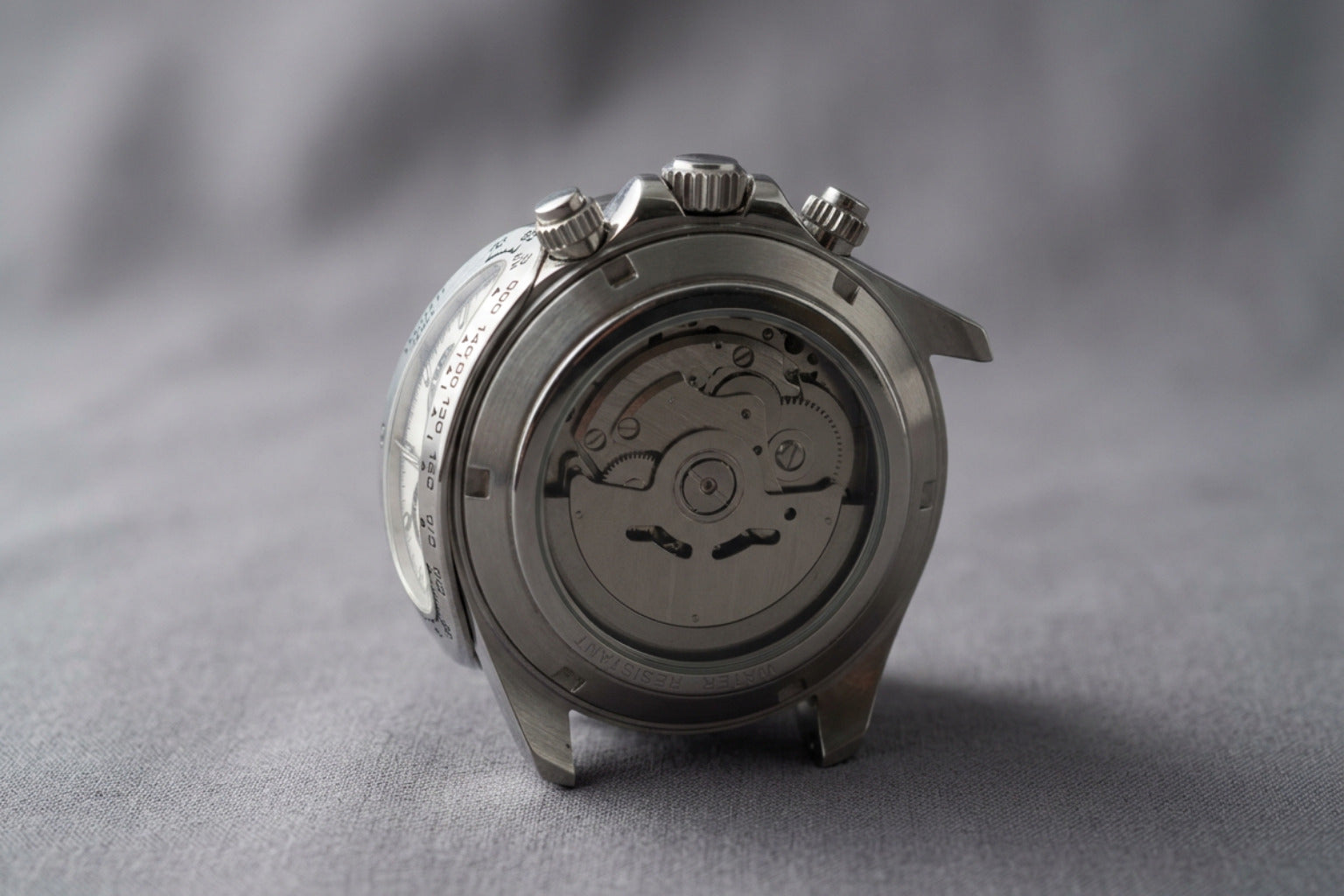
The movement is the engine of the watch. For most buyers, the choice is between quartz and mechanical, including automatic.
| Feature | Quartz Movement | Mechanical Or Automatic Movement |
|---|---|---|
| Power source | Battery or solar cell | Mainspring wound by hand or wrist movement |
| Accuracy | Very accurate, usually measured in seconds per month | Less precise, usually measured in seconds per day |
| Maintenance | Low, with periodic battery replacement | More involved, with servicing over time |
| Feel | Practical and simple | Traditional, tactile, and more mechanical |
| Best for | Convenience and reliability | Craftsmanship and collector appeal |
Quartz is ideal if you want a watch that is accurate, easy to live with, and ready whenever you pick it up. It is especially sensible for a first watch, a work watch, or something you do not plan to wear every day.
Mechanical and automatic watches appeal to people who enjoy the feeling of a small machine on the wrist. They need more attention, but many collectors enjoy the winding, the sweeping seconds hand, and the traditional engineering.
For more background, see our guide on How To Choose A Watch.
Check The Fit On Your Wrist
A watch can look perfect in photos and still feel wrong in person. Case diameter matters, but it is not the whole story. Lug-to-lug length, case thickness, bracelet shape, and overall balance all affect comfort.
As a practical guide, many wrists around 15 to 18 cm suit cases between about 38 mm and 42 mm. Larger wrists may suit bigger cases, but the lugs should not hang over the edge of your wrist.
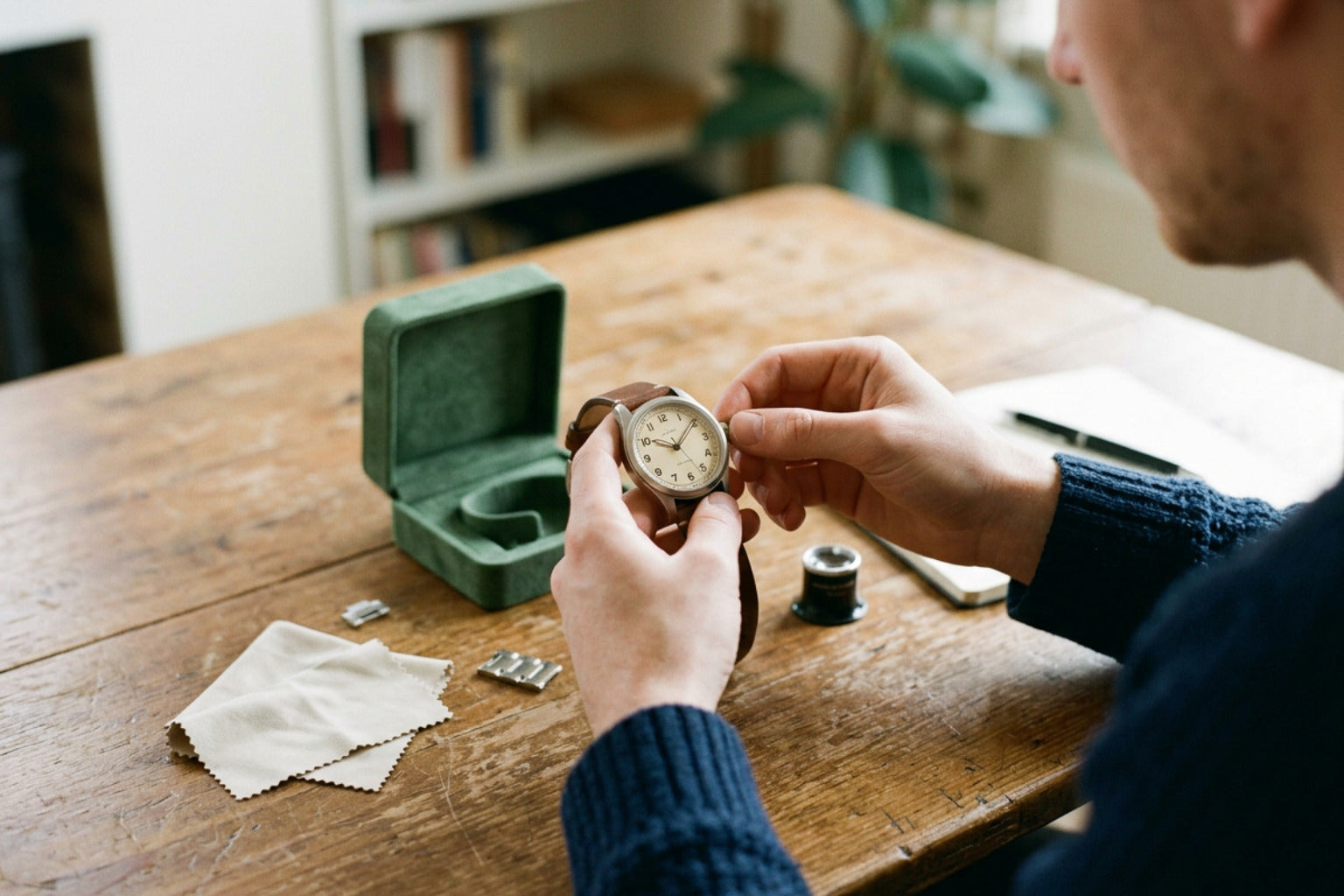
Try the watch from a few angles if you can. It should sit flat, feel balanced, and not slide around too much. If it catches on cuffs, feels top-heavy, or looks wider than your wrist, it is probably not the right fit.
Look Closely At Materials And Finishing
Good materials make a watch easier to live with. Stainless steel is the standard choice because it is durable, corrosion resistant, and suitable for daily wear. Titanium is lighter and comfortable, while ceramic is very scratch resistant but can be more vulnerable to hard impact.
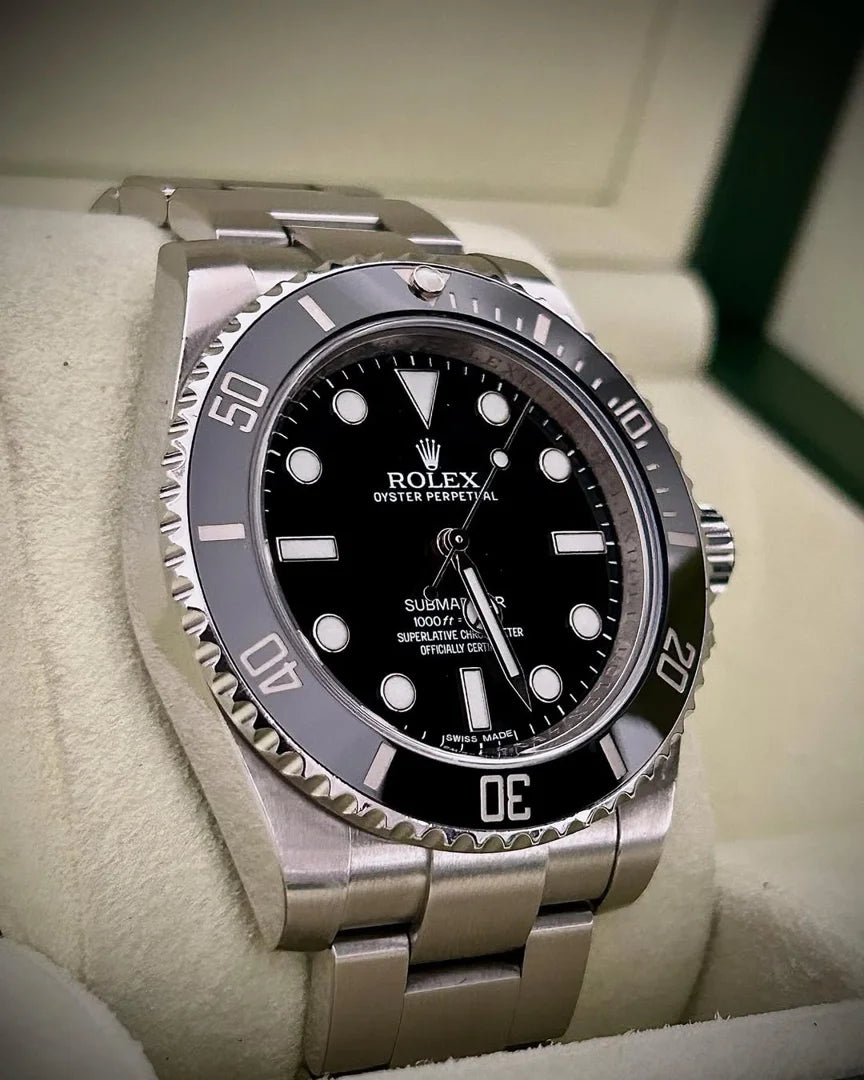
For the crystal, sapphire is usually the best everyday choice because it resists scratches far better than mineral glass. Also look at the case edges, brushing, polishing, dial printing, and marker alignment. Small details tell you a lot about how carefully a watch has been made.
Avoid judging quality by brand name alone. A strong brand can be reassuring, but the watch still needs to feel well finished in your hand and comfortable on your wrist.
Pick A Strap Or Bracelet You Will Actually Wear
The strap or bracelet changes how a watch feels more than many buyers expect. A steel bracelet is durable, versatile, and easy to wear daily. Leather can look refined, but it is not ideal for water, sweat, or hot Australian summers.
Rubber and silicone straps suit active use, beach days, and warm weather. Fabric straps are light, casual, and easy to change. If the watch allows simple strap swapping, you can make one watch work across more situations without buying another piece.
The right choice is the one that suits your routine. If you are often outdoors or near water, choose practicality first. If the watch is mainly for dinners, meetings, or formal wear, leather or a refined bracelet may make more sense.
Buying With Confidence In Australia
Once you know the style, movement, size, and materials you want, the final step is choosing where to buy. This matters just as much as the watch itself.
Pre-owned watches can offer strong value because much of the initial retail depreciation may already have occurred. They can also give you access to models that are no longer available new. The key is to buy carefully and avoid treating every online listing as equal.
When buying online, ask for clear photos of the actual watch, not just catalogue images. Look at the case edges, bracelet stretch, clasp, crystal, dial, and any visible wear. Check whether the original box and papers are included, because they can support future resale value.
The seller matters too. Choose an established Australian dealer that gives clear condition notes, direct communication, and a fair return process. This is especially important if you cannot inspect the watch in person before buying.
For a deeper look at online buying, read Buying Watches Online.
Think About Long-Term Value
Long-term value is not only about resale. It also includes serviceability, parts availability, brand demand, and whether the watch will still suit you in a few years.
Established brands often have stronger service networks and broader buyer demand. Independent and microbrand watches can offer excellent design and value, but it is worth checking how easy servicing and parts support will be later.
If you are buying your first serious watch, avoid chasing trends too hard. Simple, well-proportioned designs tend to age better than unusual colours, oversized cases, or designs that only suit one narrow setting.
You can also compare current market context in our Watch Buying Guide 2026.
Final Checks Before You Buy
Before you commit, pause and ask yourself a few plain questions:
- Will I wear this watch regularly in my actual life?
- Does it fit my wrist comfortably, not just look good in photos?
- Is the movement type right for how much maintenance I want?
- Are the condition, inclusions, and seller details clear?
- Would I still like this watch if the brand name were removed from the dial?
At WristWorks, we specialise in sourcing and trading high-quality watches for Australian buyers and collectors. Around 95% of our inventory is owned directly by us, and every consigned piece is held by WristWorks, which lets us keep the buying process controlled, transparent, and straightforward.
Our focus is on direct-to-dealer and outright transactions because they are generally the simplest and most secure path for clients who want to sell or trade a watch. Consignment is available as a secondary option when it suits the client, but outright sale remains the primary recommendation.
If you are ready to compare available pieces, browse our curated WristWorks Watches, or contact us for a clear conversation about buying, selling, or trading your next timepiece.