The Real Deal: Your Guide to Authentic Rolex Identification
Why Knowing How to Spot a Fake Rolex Matters

Learning how to spot fake Rolex watches is a critical skill in a market where replicas are becoming alarmingly sophisticated. Counterfeiters now produce fakes that can deceive even experienced buyers at first glance, making authentication more challenging than ever. With Rolex replicas dominating the counterfeit watch scene, understanding the difference between genuine and fake is essential for any prospective buyer.
The stakes are high. A fake Rolex represents a significant financial loss and undermines the confidence that comes with owning a genuine timepiece known for its quality and heritage. Whether you are buying your first luxury watch or adding to a collection, knowing what to look for protects your investment and ensures you receive the craftsmanship and value retention that define the Rolex brand.
This guide walks you through the essential checks we use daily to separate the real from the replica, empowering you to make a more informed decision. For a broader overview of the purchasing process, our guide to buying Rolex offers additional insights.
Your Step-by-Step Guide on How to Spot a Fake Rolex
The journey to identifying an authentic Rolex starts with a keen eye for the small details that counterfeiters often get wrong. These subtle imperfections are the biggest clues.
The Look: Key Details on the Dial and Crystal
The dial and crystal are the first places to check for signs of a fake.
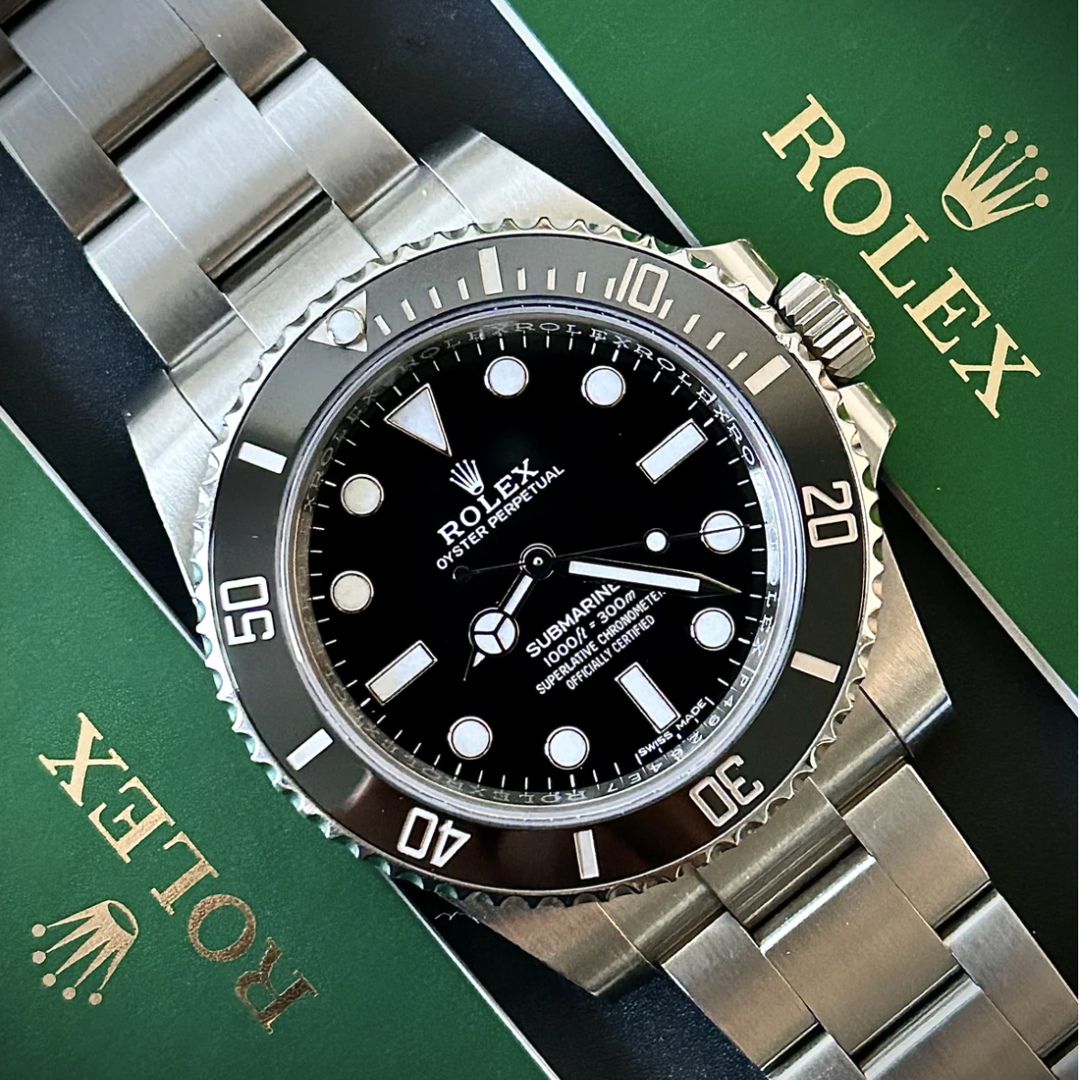
On a genuine Rolex, the dial text should be perfect. The lettering is crisp, solid, and appears slightly raised, with no signs of smudging or bleeding. Fakes often feature flatter printing with wobbly edges. The hour markers must be perfectly aligned with the minute track; any slight misalignment is a red flag.
The luminous paint, or lume, is another critical detail. It should be applied smoothly and evenly. Modern Rolex models made after 2008 use Chromalight, which emits a long-lasting, bright blue glow. If a modern watch glows green or the lume fades quickly, it is likely a fake. Vintage models used different compounds that glow green or, in the case of older tritium dials, may not glow at all.
Perhaps the most famous feature is the Cyclops lens over the date. On a genuine Rolex, it provides a precise 2.5x magnification, causing the date numeral to appear bold and fill the entire window. Fakes often have a much lower magnification (around 1.5x), making the date look small and off-centre. Since 2002, Rolex has also included a tiny, laser-etched crown logo on the sapphire crystal at the 6 o'clock position. This etching is very difficult to see with the naked eye; if you can spot it easily, it’s ironically a sign of a counterfeit.
More on what makes the Submariner a classic
The Feel: Examining the Case, Bracelet, and Weight
The tactile experience of handling a Rolex is just as important as its appearance.
A genuine Rolex feels substantial in the hand. This weight comes from the high-quality materials used, such as Rolex’s proprietary 904L stainless steel or solid 18k gold and platinum. A watch that feels suspiciously light is a major warning sign. The finishing should be flawless—run your fingers over the case and bracelet, and you should feel only smooth, refined surfaces with no sharp or rough edges.
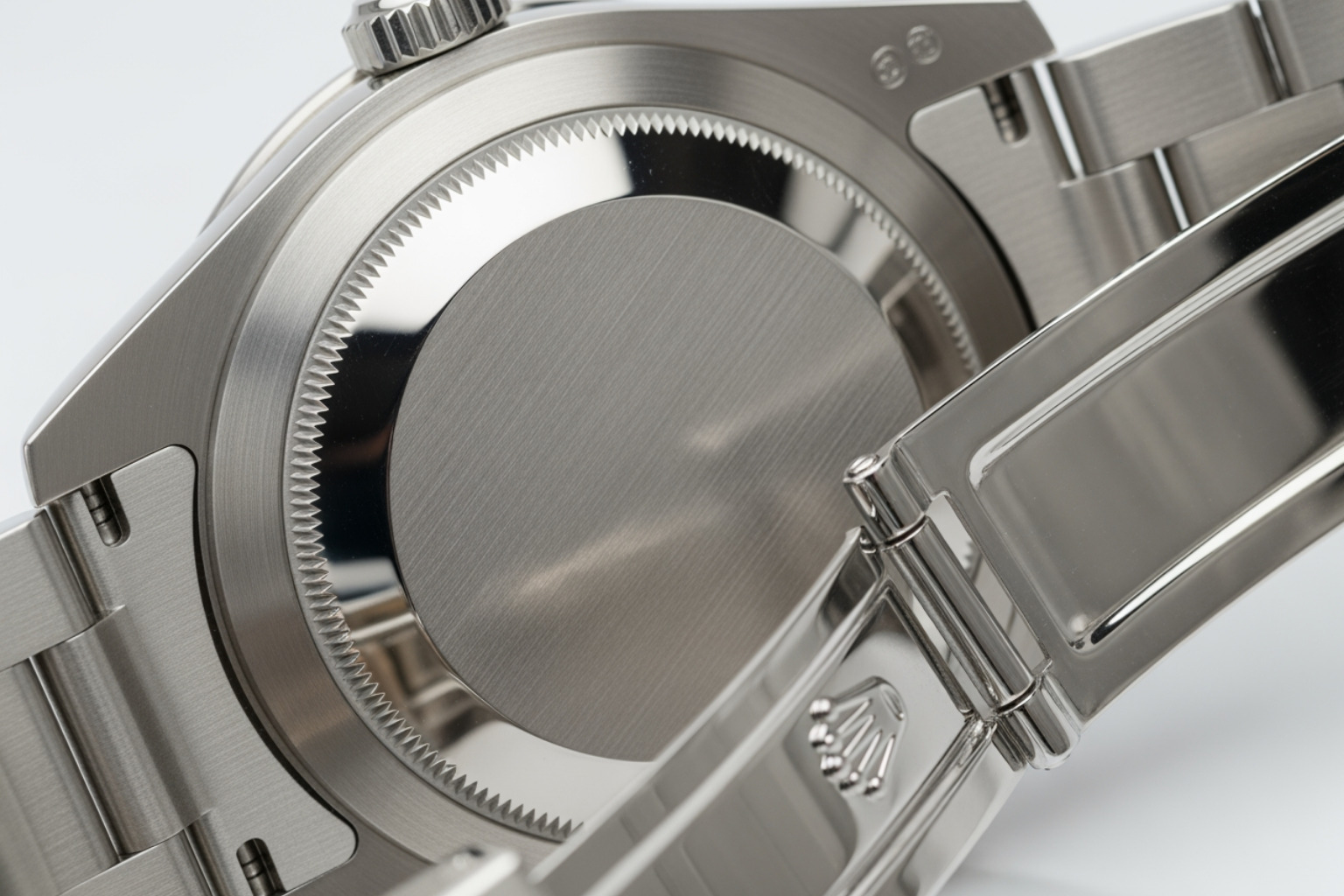
The case back offers another clue. With very few exceptions, Rolex case backs are plain, solid metal with no engravings or exhibition windows. Fakes often have clear case backs or unnecessary branding. The winding crown should also be finely crafted. On many sports models, a Triplock crown is indicated by three small dots beneath the Rolex logo, signifying improved water resistance. Finally, inspect the bracelet. Modern Rolex bracelets have solid end links that fit perfectly flush against the case, leaving no gaps. Flimsy clasps or ill-fitting links are common on counterfeits.
The Mechanics: Movement, Sound, and Crown Function
The heart of a Rolex is its movement, and its performance is a definitive test of authenticity.
The second hand on a genuine Rolex glides in a smooth, sweeping motion, ticking eight times per second. In contrast, many fakes use cheaper quartz movements, causing the second hand to jump in a stuttering, once-per-second tick. The sound is another indicator. A real Rolex movement is engineered for quiet, efficient operation and is almost silent. If you can hear a loud ticking sound, you are likely holding a fake.
Operating the crown provides further clues. Winding a genuine Rolex should feel exceptionally smooth, often described as “buttery.” A gritty or stiff feeling suggests a counterfeit mechanism. When setting the date, a key feature on most Rolex models is the instantaneous date change that clicks over precisely at midnight. Fakes often have a slow, rolling date change that can take an hour or more to complete.
Learn more about watch movements
The Proof: How to Spot a Fake Rolex with Engravings and Serial Numbers
Engravings and serial numbers are like a watch's fingerprint and are very difficult for counterfeiters to replicate perfectly.
Every genuine Rolex has a unique serial number. On models produced since 2008, this number is laser-etched on the inner rim of the bezel (the rehaut) at the 6 o'clock position. The rehaut also features a repeating "ROLEXROLEXROLEX" engraving around its circumference. On a real Rolex, these engravings are incredibly sharp, deep, and perfectly aligned with the minute markers. Fakes often have shallow, messy, or misaligned engravings that look as if they were stamped or poorly etched.
While counterfeiters may use serial numbers from real watches, these often don't match the model or production year. Comparing the serial number and engraving quality against known genuine examples is a powerful authentication step.
How to spot a fake Rolex: 3 dead giveaways
Beyond the Dial: How to Spot a Fake Rolex by its Context
The circumstances of the sale can be as revealing as the watch itself.
The biggest red flag is a price that seems "too good to be true." Rolex watches are known for their excellent value retention, so significant discounts are highly suspicious. Always prioritise buying from a trusted dealer over unverified online marketplaces or street vendors, where the risk of encountering fakes is high.
Knowing model-specific details can also help you spot a fake instantly. For example:
- Day-Date: This model has never been produced in a steel-and-gold (two-tone) configuration.
- Sea-Dweller: Models made before 2017 do not have a Cyclops date lens.
- "Quartz": Unless it is an authentic Rolex Oysterquartz model, the word "Quartz" on the dial indicates a fake.
If you have any doubt, especially when making a significant investment, the safest course of action is to seek professional authentication. A qualified expert can perform checks that are impossible for an untrained eye, giving you complete certainty.
A guide to buying pre-owned watches online
The Safest Bet: Ensuring Authenticity
While these DIY checks are valuable, the reality is that the best counterfeit watches can be incredibly convincing. For absolute certainty, nothing replaces a professional assessment from a trusted source.
At WristWorks, we built our business to address the biggest gap in Australia's luxury watch market: confidence. We understand that buyers across Perth and the rest of the country can be hesitant to purchase online due to the risks of counterfeits and a lack of transparency. Our solution is a process founded on trust.
We own 95% of our inventory, giving us direct control over the provenance and condition of the watches we offer. For those looking to sell, we also provide consignment as a secure and straightforward service. Our mission is to make buying and selling luxury watches in Australia a transparent and trustworthy experience.
Ready to find your next authentic timepiece? Explore our curated collection of Rolex watches at WristWorks or learn more about how we process every watch we sell at our About page.