
Smart Strategies for Liquidating Multi-Piece Watch Collections
Selling several watches at once can feel like a lot to manage, especially when each piece has a different condition, history and level of demand. A clear plan helps you make confident decisions and keep the process straightforward from the first conversation to settlement.
Key Takeaways
- Start with a simple list of each watch, its condition and any original box, papers or service records.
- An outright sale to an established dealer is usually the clearest option when you want a secure, coordinated process for a collection.
- Keep vintage watches in their existing condition where possible, while modern watches may benefit from careful presentation.
- Ask how each piece will be assessed and how collection, delivery and settlement will be arranged.
- If you are ready to begin, request an instant watch quote with the details you have available.
I am Brad Purdy, founder of WristWorks. I buy and sell luxury watches across Australia, and my background in mechanics and sales shapes a practical approach to watch liquidation: look closely at each piece, explain the process clearly and make the next steps easy to follow.
You can share the details you have, ask practical questions and take your time before deciding what feels right.
Choosing the Right Way to Sell a Watch Collection
When you are handling several watches, the selling method matters just as much as the watches themselves. You want a process that is clear, secure and manageable, without having to coordinate separate conversations for every piece.
Auctions and Consignment as Comparison Options
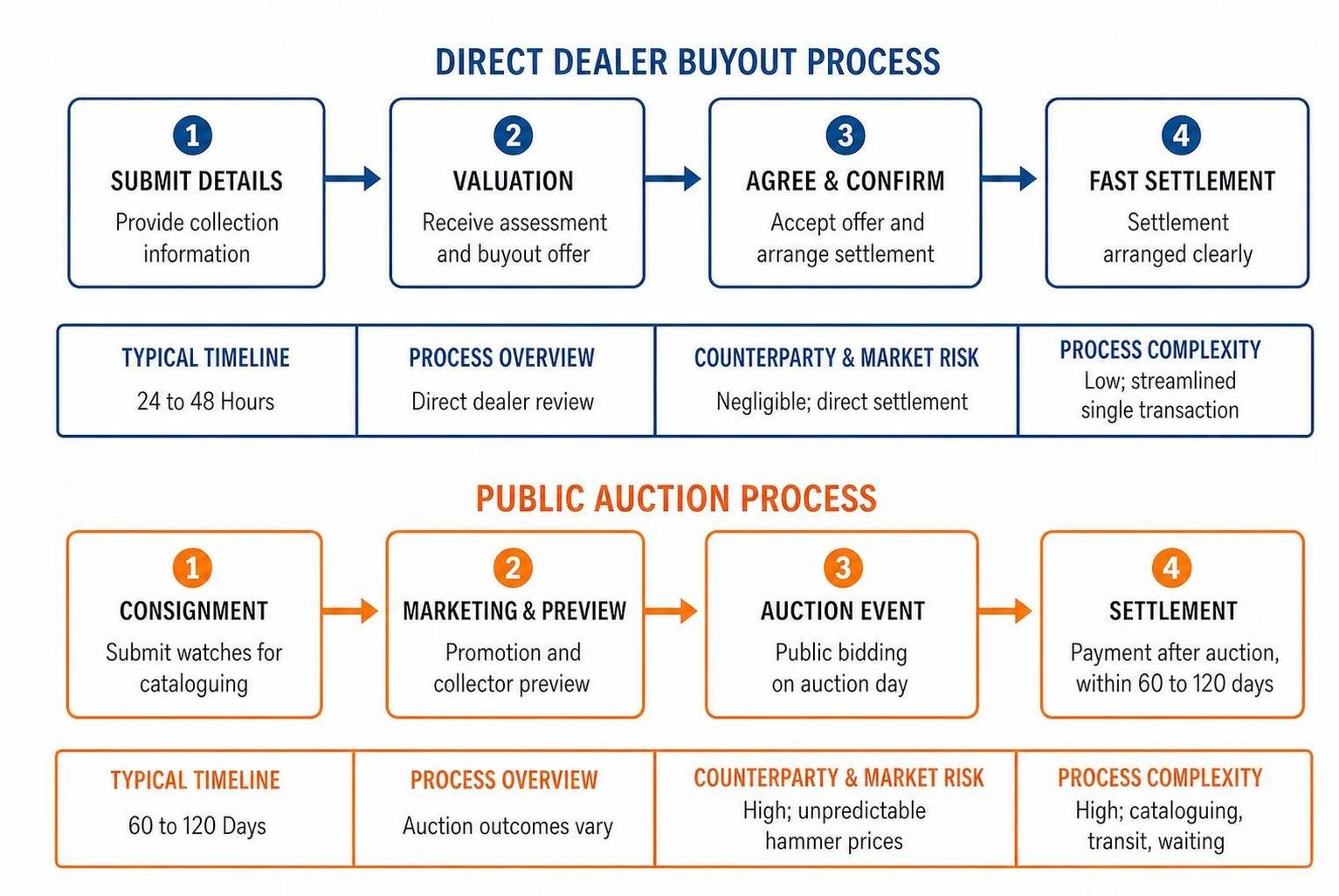
Public auctions, private online listings and consignment can suit a small number of unusual pieces, but they often require more coordination. You may need to arrange photography, descriptions, enquiries, delivery and follow-up over an extended period, with no certainty that every watch will find the right buyer at the same time.
It is also worth thinking about how much time you want to spend managing the sale. A collection can include watches with different audiences, so handling each one separately may mean repeated messages, inspections and delivery arrangements. If your goal is to simplify the process, a single experienced point of contact can make a real difference.
For an estate or a larger personal collection, this can make the process feel drawn out. Auction results can also vary with timing and buyer interest, while private selling can require careful screening of prospective buyers and secure collection arrangements.
| Selling method | What it involves | Typical level of involvement | Settlement clarity |
|---|---|---|---|
| Direct dealer buyout | One specialist assesses the collection and makes an outright offer | Low | Clear, coordinated process |
| Auction | Watches are catalogued and offered to bidders | High | Dependent on the auction outcome |
| Consignment | Watches are held for sale to retail buyers | Moderate | Completion follows each individual sale |
| Private online sale | You market, communicate and arrange handover yourself | High | Depends on each buyer and transaction |
Why a Direct Dealer Buyout Works Well for Collections
For most collection liquidations, an outright direct-to-dealer sale is the most practical option for speed and security. It avoids the need to manage multiple listings, answer ongoing buyer questions or organise several separate handovers. Instead, the collection can be reviewed as a whole, with each watch considered on its own merits.
A direct dealer conversation also gives you the chance to ask practical questions before committing. You can talk through which watches will be reviewed in person, what supporting items should be included and how the handover will be arranged. That clarity is useful when the collection includes a mix of everyday watches, modern sports models and older pieces with personal history.
At WristWorks, each watch is assessed against its condition, completeness and current market demand. WristWorks can assess suitable collections for an outright purchase, which keeps the process straightforward. Consignment is available only in select situations as a secondary option; when it is used, WristWorks holds the pieces securely and handles payments directly.
This approach is especially helpful if you are settling an estate, streamlining a collection or simply ready to move on from watches you no longer wear. You can focus on providing the available details while the practical steps are explained clearly.
That single conversation can also help you decide whether the collection should stay together or whether a particular watch deserves separate attention. The aim is not to rush a decision, but to give you a clear view of the practical options before you proceed with confidence.
A Practical Plan for Liquidating Your Watches
Liquidating several valuable watches is easier when you work through the collection in a sensible order. Start by gathering what you already know, then let the condition and suitability of each piece guide the conversation.
Prepare a Clear Collection Overview
Begin with a simple list of the watches you plan to sell. Include the brand, model name, approximate age, visible condition and whether you have the original box, papers or service records. Clear photos of the dial, case, bracelet and clasp can also help a specialist form an initial view before a physical assessment.
Take a moment to separate watches that belong to different family members, form part of an estate or have special personal significance. This helps avoid accidental mix-ups and makes it easier to decide whether every watch should be included in the same sale. Keeping the collection organised in this way also makes an in-person review more efficient and less stressful.
You do not need to make the list perfect. The aim is to give a dealer enough context to understand the collection and identify which pieces may need a closer look. If information is missing, say so. Honest details are more helpful than guesses, particularly for older watches that may have had parts replaced or been polished over time.
Complete presentation sets can make it easier to assess a watch's background and condition. Keep boxes, papers, spare links and service documents together where possible, but do not worry if some items are no longer available. Each watch can still be considered on its own condition and desirability.
Present Modern and Vintage Watches Carefully
Before arranging an assessment, avoid unnecessary changes. A gentle clean and a safe place to store each watch are usually enough. Modern watches can sometimes benefit from careful polishing to restore a neat appearance, while vintage watches are generally better left unpolished because original case lines, surfaces and wear can matter to collectors.
If a watch has been stored for a long time, mention whether it is running, stopping or showing signs of moisture. There is no need to arrange work before speaking with a specialist. In many cases, it is better to discuss the watch in its current condition so you can decide on the most sensible next step together.
Handle the Australian Practicalities
For an Australian collection sale, make sure you have the right to sell every piece and keep any supporting ownership records available. If the watches form part of an estate or a shared asset arrangement, speak with the appropriate adviser before proceeding.
Secure transport is also important. Whether you are sending a watch from regional Western Australia, Perth or another part of Australia, use a delivery method that provides tracking and is suitable for valuable items. Avoid leaving watches unattended or discussing collection details publicly.
When you speak with a dealer, ask how the assessment, transport and settlement steps will work. A reputable process should make responsibilities clear, explain what information is needed and give you a straightforward point of contact from beginning to end.
It can help to prepare a few questions before that conversation. Ask what to bring to an assessment, whether the watches can be reviewed together and what happens if one piece needs further inspection. A calm, well-explained process gives you more confidence and helps you keep control of the decision.
Before handing over a collection, place each watch and its supporting items in a separate protective pouch or container. A simple checklist can help you confirm that nothing has been left behind and that each item is ready for review.
If a collection includes delicate straps, loose links or separate presentation items, keep those pieces together and mention them when arranging the review. This gives the dealer a clearer picture of what is included and helps avoid confusion during transport or handover. It also lets you set aside anything you may prefer to keep before the collection is finalised for sale or assessment.
Ready to Liquidate Your Watch Collection?
If you are ready to sell an estate, simplify a collection or move on from watches you no longer wear, WristWorks can help you take the next step. Start with a watch enquiry consultation, browse available luxury watches, or contact WristWorks to discuss your collection.

